If you’re a piping engineer, plant manager, or procurement specialist working in industrial applications—think oil and gas, petrochemical, water treatment, or chemical processing—you’ve likely stared at a weld end cap at some point. That simple, domed (or sometimes flat-topped) metal piece welded to the end of a pipe is way more than just a blank cover. It’s a critical pressure boundary component, and its pressure rating isn’t a vague spec you can guess at—it’s tied to a mix of material properties, manufacturing standards, and real-world operating conditions. As a supplier who’s been making weld end caps for 12 years, I’ve fielded hundreds of calls from people asking, “What’s the pressure rating of a weld end cap, anyway?” Most of the time, the answer isn’t a single number. It depends on who made it, what it’s made of, and what you’re actually using it for. Let’s break this down like I would to a customer on the phone—no jargon overload, just the facts that matter for your project. Weld End Caps
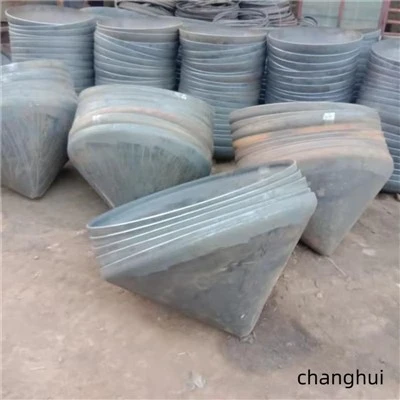
First, let’s clear up the basics: pressure rating for any piping component is usually defined as the maximum internal pressure a part can safely handle at a given temperature, right? For weld end caps, that’s rooted in two core things: the standard they’re manufactured to, and the material they’re forged or machined from. I’ve seen too many spec sheets that list a generic “150#” or “300#” rating without context, which is a red flag. Those numbers don’t exist in a vacuum—they come from standards like ASME B16.9 for butt-weld fittings, or ASME B16.28 for smaller, forged fittings, which are the two most common specs for weld end caps. For example, an ASME B16.9 carbon steel weld end cap with a 2-inch diameter: at room temperature (70°F, the standard test temp for piping specs), its rated pressure lines up with the ANSI Class number—so Class 150 would max out around 285 psi, Class 300 around 740 psi, Class 600 around 1480 psi, and so on. But here’s the catch: that rating drops as temperature rises. Steel expands, and its tensile strength decreases as it heats up. A Class 300 carbon steel cap at 500°F, for example, isn’t rated for 740 psi anymore—it’s more like 580 psi. At 800°F, that number plummets to under 300 psi. If you’re working with high-temperature service, like a steam line at 750°F, you can’t just grab any 300# cap—you need to check the material’s temperature-pressure derating curve.
Materials make all the difference here, too. I supply weld end caps in everything from carbon steel (A105, the workhorse for most low to medium temp applications) to stainless steel (304, 316, 316L for corrosion resistance), alloy steels (A234 WP5 for high heat, A335 P11 for refineries), even exotic alloys like Hastelloy for aggressive chemical environments. Each material has a different tensile strength at temperature, so their pressure ratings change. For example, a 3-inch Class 300 A105 carbon steel cap at room temp is ~740 psi, while the same size and Class in 316 stainless steel is actually a bit higher—around 770 psi—because 316 has a higher ultimate tensile strength than A105 at standard temp. But flip to 600°F, and A105’s rating drops to ~550 psi, while 316’s stays closer to 650 psi. That’s why picking the right material isn’t just about corrosion—it’s about pressure integrity. I’ve had customers call me panicking because they ordered a 316 cap for a high-temp water line, only to realize they could have saved money with A105 if the corrosion risk was low. I always tell them: get your operating temp and pressure first, then match the material accordingly.
Manufacturing processes also affect pressure rating, even when you’re using the same material and spec. Most weld end caps I supply are hot-forged—we heat the metal to near its recrystallization temperature and press it into a die, which eliminates internal voids and makes the grain structure uniform. That’s way better than a machined cap, which is cut from a solid bar of metal. Hot-forged caps have a higher pressure rating because their strength is consistent throughout the part. Machined caps are fine for low-pressure, non-critical applications, but if you’re dealing with pressures near the maximum rating, forged is the way to go. Another thing: wall thickness. The nominal pipe size (NPS) you see, like 2-inch or 6-inch, is the outer diameter, but the wall thickness of the cap has to match the pipe’s schedule. Schedule 40 is standard for most applications, Schedule 80 is thicker for higher pressure, and Schedule 160 is for extreme service. A 6-inch Schedule 80 Class 300 cap will have a higher pressure rating than the same size in Schedule 40, because the thicker wall can withstand more internal force. I’ve seen people try to use a thin Schedule 40 cap for a high-pressure line, and that’s a huge safety risk—always match the cap’s wall thickness to the pipe’s schedule in your system.
Now, let’s talk about common misconceptions. A lot of people think the pressure rating of a weld end cap is the same as the pipe it’s welded to, but that’s not always true. Pipes have their own pressure ratings based on schedule and material, and weld end caps have their own, even when they’re the same spec. For example, a 3-inch Schedule 40 Class 300 A105 pipe has a room temp rating of ~1600 psi, while the same spec end cap is only ~740 psi. That’s because the cap’s domed shape experiences different stress when pressurized—compressive stress on the dome is different than the axial stress in a straight pipe. If you weld a cap to a pipe, the pressure rating of the assembly is limited by the lower of the two ratings, so you can’t rely on the pipe’s higher rating to cover the cap. That’s a mistake that leads to pipe failures, and I’ve seen it more times than I can count. Another myth: higher Class numbers mean higher pressure, no matter the material or temp. Class 150 is not 150 psi at all temperatures. At 1000°F, a Class 150 carbon steel cap’s rating is only around 50 psi—way lower than a Class 300 at room temp. That’s why you can’t just look at the Class number; you have to reference the ASME pressure-temperature tables, which list every spec and material combination for every temperature.
So, what do you need to do to get the right pressure rating for your weld end cap? Let’s walk through the steps I go through with every customer: first, get your system’s operating conditions: what’s the internal pressure (max, not average) and maximum operating temperature? Second, confirm the pipe spec: NPS, schedule, material, and any standards you’re working to (ASME, API, or company-specific specs for refineries or power plants). Third, define your application: is it water, steam, crude oil, corrosive chemicals? That tells you if you need stainless steel, alloy, or carbon steel. Fourth, check the welding connection: butt-weld is standard for most industrial piping, but there are also socket weld and threaded end caps for smaller sizes, which have their own pressure ratings—socket weld caps, for example, have lower ratings than butt-weld because the socket can create stress concentrations. Fifth, ask the supplier for a material test report (MTR). Any reputable supplier should provide an MTR that confirms the material’s composition, mechanical properties, and pressure rating per the applicable standard. I always send MTRs with every cap I ship, because that’s non-negotiable for critical applications.
Wait, what about custom weld end caps? A lot of specialty projects need caps with odd diameters, or thicker walls, or exotic materials. The pressure rating for custom caps isn’t always listed in standard ASME tables, but it can be calculated using the Barlow’s Formula, which is the standard equation for calculating pressure rating of thin-walled pressure vessels: P = (2 * S * t) / D, where P is internal pressure, S is allowable stress of the material at temperature, t is wall thickness, and D is outer diameter. But Barlow’s Formula is an approximation—for domed ends, there’s a correction factor because the dome distributes stress differently. That’s why I always work with customers to validate custom caps either via finite element analysis (FEA) testing, or by adhering to ASME B16.25’s guidelines for custom butt-weld fittings. I’ve made custom 12-inch weld end caps for a power plant’s boiler feed line, and we did FEA testing to confirm the pressure rating met their 1800 psi requirement at 700°F, which gave them peace of mind for their high-stakes system.
I also want to mention safety factors here. No reputable supplier sets the pressure rating at the absolute maximum a part can handle. Standards like ASME require a minimum safety factor of 3.5:1 for pressure boundary components, meaning the cap has to withstand 3.5 times the operating pressure before failing. That’s a non-negotiable rule for industrial piping, so if a supplier tries to sell you a cap with a rating that’s exactly your operating pressure, that’s a red flag—they’re cutting corners. I always recommend adding a 25-30% safety margin on top of your maximum operating pressure, just to account for fluctuations in pressure, temperature swings, or unexpected system loads. For example, if your max operating pressure is 1000 psi, go for a cap rated for at least 1250 psi, not 1000. That small extra buffer can prevent a catastrophic failure down the line.
Let’s wrap this up with a real-world example, because numbers stick better. Suppose you’re working on a municipal water treatment plant’s 6-inch pipe line, operating at 120 psi, 120°F, with mild corrosion. The standard here is ASME B16.9, carbon steel A105. A 6-inch Schedule 40 Class 150 weld end cap: room temp rating is ~285 psi, which is way higher than your 120 psi. That works, and it’s the most cost-effective option. But if that same line is in a coastal area with saltwater corrosion, you’d switch to 316 stainless steel: a 6-inch Schedule 40 Class 150 316 cap has a room temp rating of ~275 psi, which is still more than enough, and the stainless will resist the salt corrosion for 20+ years, compared to carbon steel’s 10-15. If you take that same line and it’s a steam line operating at 500°F, 300 psi, you can’t use Class 150 anymore. A Class 300 A105 cap at 500°F has a rating of ~580 psi, which is perfect—way above your 300 psi. But if you tried to use a Class 150 A105 at 500°F, its rating is only ~110 psi, which is way too low. That’s the mistake a lot of new engineers make, mixing up room temp and high-temp ratings.
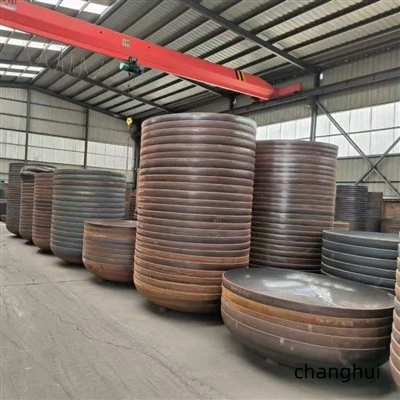
At the end of the day, the pressure rating of a weld end cap isn’t a generic number—it’s a combination of standards, material, temperature, wall thickness, and application. If you’re still not sure which cap you need, don’t guess. Reach out to a supplier who knows their stuff, ask for their MTRs, and confirm all your operating details. I’ve been in this business long enough to know that a little extra time getting the right spec saves a lot of time and money (and safety) down the line. Whether you need standard carbon steel caps for a low-pressure water line, alloy caps for a refinery’s high-heat process, or custom caps for a specialty project, I can help you find the right fit. Feel free to connect with our team to discuss your specific requirements, so we can recommend a weld end cap that meets your pressure, material, and application needs.
Tank Heads References
ASME B16.9, Factory-Made Wrought Buttwelding Fittings.
ASME B16.28, Wrought Steel Buttwelding Short Radius Elbows and Returns.
ASME Boiler and Pressure Vessel Code (BPVC), Section VIII, Division 1, Pressure Vessels Rules.
API 605, Large Diameter Steel Flanges and Fittings for Refinery Service.
Cangzhou Changhui Head Manufacturing Co., Ltd.
We are one of the most professional weld end caps manufacturers and suppliers in China, featured by quality products and good price. Please rest assured to wholesale durable weld end caps for sale here from our factory. Welcome to view our website for more information.
Address: South Industrial Zone, Yanshan County, Cangzhou City, Hebei Province, China.
E-mail: chunle.zhang@changhuitankhead.com
WebSite: https://www.changhuitankhead.com/
