Hey everyone, if you’ve ever stood in a coffee shop watching someone panic because their laptop dies mid-remote work, or seen a traveler scramble for a charge before boarding a flight, you’ve probably thought about those handy little bricks called power banks. But I bet you’ve seen the “multifunction” ones and thought—how the heck do they do all that stuff? I’m a power bank supplier, not a physicist, so I’m gonna break this down like we’re chatting over a post-work beer, no jargon, no weird textbook stuff. Multifunction Power Bank

First, let’s start with the basics, because you can’t understand a multifunction power bank without knowing what a regular one does. At its core, every power bank is just a big, portable battery. Remember your phone’s lithium-ion battery? Same tech, just cranked up a few notches. Regular power banks usually have one or two USB ports, you plug your phone in, it shoves stored energy from the bank into your phone’s battery. Makes sense. Now multifunction? That’s the upgrade that turns “backup charger” into “carry-all tech sidekick.” The ones we sell, for example, aren’t just for phones—they work with laptops, wireless earbuds, even have little LED flashlights or can charge another power bank? Wait, no, let’s not get ahead of ourselves. Let’s actually walk through how this works step by step.
First, the main star: the battery cells. Most multifunction power banks use lithium-polymer or lithium-ion cells these days, right? Lithium-ion was invented in the 70s but became mainstream in the 90s for phones because it doesn’t hold a charge if you let it die empty all the time, and it’s way denser than old nickel-cadmium batteries (remember those clunky laptop batteries that died in two years? Yeah, those were the worst). The cells in a power bank are wired together in what’s called a “battery pack”—parallel to add more capacity, series to bump up the voltage. Voltage is super important here, because your phone needs 5 volts to charge, a lot of laptops need 12, 15, even 20 volts. That’s where the next part comes in: the charge management board. This is the brains of the whole operation. Like, if your phone asks for 5V at 2 amps to charge fast, and your laptop needs 20V at 3 amps, this board is the one that adjusts that. It steps up or steps down the voltage, makes sure too much power doesn’t pour into your device (that’s how it prevents your phone battery from blowing up, by the way—super important), and it keeps track of how much power is left in the bank. That little LED light that blinks to show you 3 bars? That’s the board talking.
Now, the part that makes them multifunction, not just regular power banks. Let’s list the common extra features, and how each works, because that’s the fun stuff. First, wireless charging. You’ve seen those pads that you set your phone on, right? Same tech in a lot of multifunction power banks now, especially the slim ones people slip in their pockets. How does that work? It’s called inductive charging, and it’s old—like, Nikola Tesla did stuff like this over 100 years ago, crazy. Basically, the power bank has a coil of copper wire inside. When electricity flows through that coil, it creates a magnetic field. If your phone has its own charging coil inside, when you set it on top of the power bank, that magnetic field pushes electrons into your phone’s coil, turning the magnetic energy back into electricity. That’s why you have to line them up, and why if you have a thick case or a metal plate in your phone it doesn’t work—metal messes with the magnetic field. We add this feature to a lot of our mid-tier multifunction banks because people hate fumbling with cables when their hands are full, like when they’re carrying groceries and a kid.
Next, USB-C PD (Power Delivery) fast charging. A lot of people think fast charging is just “more electricity,” but no—again, it’s the voltage thing. Standard USB is 5V, max 2.4 amps, that’s 12 watts total. PD can go up to 100 watts, which is enough to charge a 16-inch MacBook Pro. How? The charge management board negotiates with your device first. It says, “Hey, my power bank can push 20V at 5 amps, can your laptop handle that?” If the laptop says yes, it cranks it up, so instead of taking 2 hours to charge, it takes 45 minutes. That’s why our multifunction power banks are so popular with freelancers who work from cafes—they don’t have to hunt for a wall outlet for their laptop, just plug into the power bank and go.
Wait, what about the AC outlet some multifunction power banks have? Oh right, the ones that are like a portable wall plug. That’s the wildest part for a lot of people, because how do you get AC power (the kind that runs your laptop charger) from a lithium battery that only holds DC power? That’s where an inverter comes in. The battery puts out DC (direct current, which flows one way, like a battery), and an inverter turns that DC into AC (alternating current, which flips direction 50 times a second, that’s what comes out of your wall). Now, there’s a catch here: most small AC inverters in power banks are modified sine wave, which is totally fine for laptops, phones, even mini fridges, but if you have something with a sensitive motor like a vintage record player, you might get a little hum. But for 99% of people, it works no problem. We only make the AC versions in higher capacities, like 20,000 mAh or more, because inverters use a bit of extra power, so you don’t want a small power bank trying to run one.
And don’t forget the extra little features, like the built-in cables! A lot of our multifunction banks have a Lightning, USB-C, and micro-USB cable all tucked into the body, no more forgetting your cable at home. That’s just thin cables molded into the bank, with little flaps to cover the ports so they don’t get dusty. Easy, solves the “I left my charger at my mom’s house” problem that everyone has had at least once.
Wait, let’s talk about the fine print, because there’s stuff no one tells you about multifunction power banks. First, capacity ratings. You see numbers like 10,000 mAh, 20,000 mAh, but that’s the total energy stored in the battery cells, not how much you actually get to use. Because when power flows through the charge board, it loses some as heat—like, if a 10,000 mAh power bank says it has a 70% efficiency rating, that means you can actually charge your phone’s 3,000 mAh battery about twice, not three times. That’s not a scam, that’s just physics, we’re transparent about that on all our listings, so no one gets mad when it doesn’t “top off their phone 3 times” like a fake power bank sold on Amazon.
Another thing: safety. Lithium batteries can be finicky if they’re made cheap. That’s why all our multifunction power banks have overcharge protection, over-discharge protection, short circuit protection, even temperature control. If your power bank gets too hot (like if you leave it in a car in the sun for 8 hours), the board will shut it off automatically, no fire risk. A lot of cheap power banks skip these protections, which is why you hear about those viral videos of them exploding. We test every single batch for this, so our customers never have to worry about that.
Now, you might be thinking, why would I need a multifunction one instead of three separate chargers? Let’s be real, everyone hates carrying three things in their bag. A regular power bank, a wireless charger, a laptop charger—bulky, heavy. Multifunction power banks cram all that into one slim, lightweight device that fits in your purse, laptop bag, even a big pocket. I’ve been selling these for 5 years, and the most common feedback I get is from travelers: “I used to carry two wall chargers, a power bank, and 3 cables, now I just carry this.” That’s the point of the multifunction part—convenience, no extra clutter.
Wait, let’s clear up a common myth. A lot of people say “power banks charge faster than wall outlets.” No, that’s not true. The power bank just stores energy, it doesn’t create it. If your wall outlet puts out 65 watts, a 65W PD power bank will charge your laptop at the same speed as the wall outlet, because it’s pushing the same amount of power. It’s just portable. The only time it’s faster is if you don’t have a wall outlet handy, obviously.
Let’s also talk about how it charges itself. You plug the power bank into the wall, right? Same process: the wall’s AC goes through an inverter in the wall adapter (wait, no, most wall adapters turn AC to DC first), then goes to the charge management board in the power bank, which converts that to the right voltage for the battery cells, and tops them up. Super straightforward, same as how you charge your phone, just bigger.
Now, for anyone who’s been looking at getting one, here’s a quick tip: think about what you need it for. If you just need to charge your phone and earbuds for a weekend trip, a 10,000 mAh one with wireless charging and built-in Lightning/USB-C is perfect. If you’re a digital nomad who needs to charge a laptop, a tablet, and your phone on a 10-hour flight, go for a 20,000 mAh one with PD 100W and an optional AC outlet. We don’t sell anything over 27,000 mAh by the way, because airlines won’t let you carry power banks over that on flights, that’s a FAA rule, so we always make sure our compliant, no hassle.
I know a lot of people have had bad experiences with power banks before—ones that die in the middle of a trip, or don’t charge their phone as much as advertised. That’s why when I’m talking to potential buyers, I always emphasize that we use premium cells from reputable manufacturers, not the cheap ones that die after 50 charge cycles. Our multifunction power banks last about 3-5 years, even with regular use, which is way longer than those $10 ones you see at the gas station.
Wait, let’s recap the whole thing in plain terms, no tech jargon, to make sure you got it: A multifunction power bank is basically a fancy portable battery pack with a smart control board that adjusts power to fit whatever you plug into it. The main battery stores the energy, the board regulates it so it doesn’t break your devices, and the extra features (wireless charging, AC outlets, fast charging) are just add-ons that use that stored energy in different ways. It’s not magic, it’s just clever engineering that makes carrying less stuff easier.
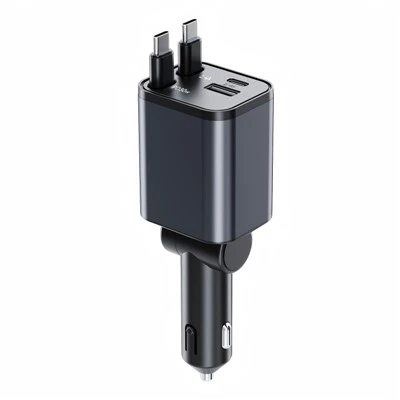
If you’re tired of juggling chargers, or sick of power banks that die when you need them most, we’ve got a range of multifunction power banks for every use case, from slim pocket-sized ones for daily commutes to heavy-duty ones for work trips. If you’re a small business looking to bulk order for your team, or just a consumer looking for a reliable one to buy for personal use, feel free to reach out to our team to chat about what you need, no pressure, no weird sales pitches. We just make stuff that works, because I’ve been there—stuck with a dead phone at a concert, missed a flight because my laptop died, I know how frustrating that is.
Multifunction Power Bank References:
- Lithium-Ion Batteries: Basics and Applications, International Electrotechnical Commission
- Wireless Power Transfer Fundamentals, Wireless Power Consortium
- Portable Power Bank Safety Standards, Federal Aviation Administration
- USB Power Delivery Specification Revision 3.2, USB Implementers Forum
KOMOS Co., Ltd.
As one of the most professional multifunction power bank manufacturers and suppliers in China, we are committed to providing high quality custom service and OEM service. Please feel free to wholesale bulk durable multifunction power bank at competitive price from our factory. Welcome to contact us for quotation.
Address: 4th Floor, Building 3, Zhongxi Buchong Community, Shajing Street, Bao’an District, Shenzhen City, Guangdong Province, China 518104
E-mail: contact@komos-tech.com
WebSite: https://www.komos-tech.com/
