In the dynamic realm of aerospace engineering, the quest for innovation and advancement is ceaseless. As a leading provider of rapid prototyping services, I am often asked the question: Can rapid prototyping services create prototypes for aerospace applications? The answer is a resounding yes, and in this blog post, I’ll delve into the details of how our services can significantly contribute to the aerospace industry. Rapid Prototyping Services
The Role of Prototyping in Aerospace Engineering
Aerospace engineering is a field that demands precision, reliability, and innovation. Prototyping plays a crucial role in the development process, allowing engineers to test and validate their designs before committing to full – scale production. In the aerospace industry, where safety is paramount and costs are extremely high, the ability to quickly iterate and refine designs can save both time and money.
Prototypes serve as tangible models that can be used for various purposes, such as aerodynamic testing, structural analysis, and human – factors evaluation. They also help in identifying potential design flaws early in the development cycle, reducing the risk of costly design changes later on.
How Rapid Prototyping Services Fit In
Rapid prototyping is a game – changer in the aerospace industry. It encompasses a range of manufacturing techniques that can produce physical prototypes from digital models in a relatively short period. These techniques include 3D printing, CNC machining, and injection molding, each with its own set of advantages for aerospace applications.
3D Printing
3D printing, also known as additive manufacturing, is one of the most powerful tools in rapid prototyping. It allows for the creation of complex geometries that would be difficult or impossible to produce using traditional manufacturing methods. For aerospace prototypes, 3D printing can be used to produce parts with internal lattice structures, which can significantly reduce weight without sacrificing strength.
Materials used in 3D printing for aerospace applications include high – performance polymers, such as PEEK and ULTEM, and metal alloys like titanium and aluminum. These materials offer excellent mechanical properties, heat resistance, and chemical stability, making them suitable for the harsh environments encountered in aerospace.
For example, we recently used 3D printing to create a prototype of an aerospace engine component. The component had a complex internal cooling channel design, which was easily achieved using 3D printing. The prototype was then tested for heat transfer efficiency, and any design improvements could be quickly incorporated into a new digital model and printed.
CNC Machining
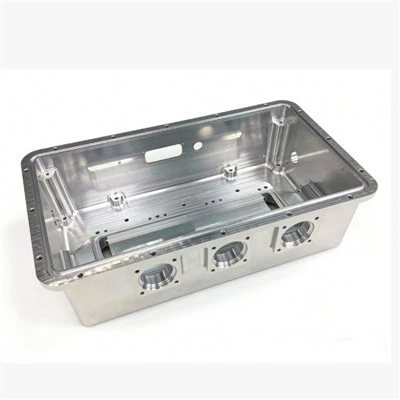
CNC (Computer Numerical Control) machining is a subtractive manufacturing process that uses computer – controlled machines to remove material from a solid block. It is known for its high precision and ability to produce parts with tight tolerances. In aerospace applications, CNC machining is often used for producing critical components, such as turbine blades and structural parts.
We have extensive experience in CNC machining for aerospace prototypes. Our state – of – the – art CNC machines can work with a variety of materials, including stainless steel, titanium, and aluminum. The advantage of CNC machining is its ability to produce high – quality, accurate parts consistently. For instance, when creating a prototype of an aerospace landing gear component, CNC machining ensures that the part meets the exact specifications required for safe and reliable operation.
Injection Molding
Injection molding is a manufacturing process where molten material is injected into a mold cavity to form a part. It is ideal for producing large quantities of identical parts quickly and cost – effectively. In the aerospace industry, injection molding can be used to produce interior components, such as cabin panels and control knobs.
Our injection molding services for aerospace prototypes offer flexibility in material selection and the ability to create parts with high surface finish quality. We use advanced mold design and manufacturing techniques to ensure that the prototypes accurately represent the final production parts.
Challenges and Solutions in Aerospace Rapid Prototyping
While rapid prototyping offers numerous benefits for aerospace applications, there are also some challenges that need to be addressed.
Material Compatibility
Aerospace applications have strict requirements for material properties, such as temperature resistance, corrosion resistance, and mechanical strength. Selecting the right material for rapid prototyping is crucial. We work closely with material suppliers to source high – performance materials that meet the specific requirements of aerospace prototypes. We also conduct extensive material testing to ensure that the prototypes perform as expected.
Quality Control
Quality control is of utmost importance in aerospace engineering. Our rapid prototyping processes are subject to rigorous quality control measures. We use advanced inspection equipment, such as coordinate measuring machines (CMM), to verify the dimensional accuracy of the prototypes. Additionally, we perform non – destructive testing, such as X – ray and ultrasonic testing, to detect any internal defects.
Certification
Many aerospace components need to undergo strict certification processes to ensure compliance with industry standards and regulations. We understand the importance of certification and have experience in working with customers to ensure that the prototypes meet all the necessary requirements. We can provide documentation and support throughout the certification process.
Success Stories in Aerospace Prototyping
Over the years, we have successfully provided rapid prototyping services for a variety of aerospace applications.
One of our notable projects involved working with a startup aerospace company on the development of a new unmanned aerial vehicle (UAV). Using 3D printing and CNC machining, we were able to quickly produce prototypes of the UAV’s airframe, wings, and propulsion system components. The ability to rapidly iterate on the designs based on test results allowed the company to accelerate the development process and bring the UAV to market faster.
Another project was for a major aerospace manufacturer that was looking to improve the efficiency of an existing engine design. We used rapid prototyping techniques to create prototypes of new engine components, which were then tested in a real – world environment. The feedback from these tests was used to refine the designs, resulting in a more fuel – efficient and powerful engine.
Looking to the Future
The future of rapid prototyping in the aerospace industry looks promising. As technology continues to advance, we can expect even more sophisticated rapid prototyping techniques and materials to become available. This will enable the creation of more complex and high – performance aerospace prototypes, leading to further innovation in the industry.
We are committed to staying at the forefront of rapid prototyping technology and continuing to provide our customers in the aerospace industry with the best possible solutions. Whether it’s a small startup looking to test a new concept or a large aerospace corporation seeking to improve an existing design, we have the expertise and capabilities to meet your needs.
Contact Us for Your Aerospace Prototyping Needs
SLS Printing If you’re in the aerospace industry and are looking for a reliable partner for your rapid prototyping needs, we’d love to hear from you. Our team of experts is ready to work with you to understand your requirements and provide customized prototyping solutions. Contact us to discuss your project, and let’s take the first step towards bringing your aerospace innovation to life.
References
- Gibson, I., Rosen, D. W., & Stucker, B. (2014). Additive Manufacturing Technologies: 3D Printing, Rapid Prototyping, and Direct Digital Manufacturing. Springer.
- Dimitrov, F., & Arastoopour, H. (2012). Additive and Subtractive Manufacturing Technologies. ASME Press.
- National Research Council (US) Committee on Achieving Competitiveness in the U.S. Aerospace Industry. (2012). Reinventing Aerospace: A Blueprint for the Next Century. The National Academies Press.
Dongguan Xinchuan Precision Manufacturing Co., Ltd.
As one of the most professional rapid prototyping services manufacturers and suppliers in China, we offer a quick lead time for customized orders. Please feel free to buy precision rapid prototyping services made in China here from our factory. Contact us for quotation.
Address: #16 Gangjian Road, Changping Town, Dongguan City, Guangdong, China. 523000
E-mail: FreeQuote@xcprecision.com
WebSite: https://www.xcprecisions.com/
