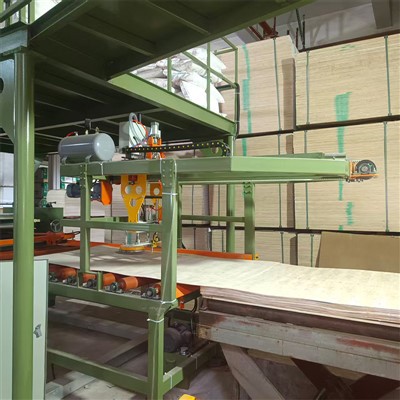
In the world of plywood manufacturing, the relationship between hot – press temperature and adhesive curing is a topic of utmost importance. As a supplier of hot – presses for plywood, I’ve witnessed firsthand how this relationship can significantly impact the quality and efficiency of plywood production. Hot-press for Plywood
The Basics of Adhesive Curing in Plywood
Adhesives play a central role in plywood production. They are used to bond multiple layers of wood veneers together, providing strength and stability to the final product. The process of adhesive curing is essentially a chemical reaction that transforms the liquid or semi – liquid adhesive into a solid state, creating strong bonds between the veneers.
There are several types of adhesives commonly used in plywood manufacturing, such as urea – formaldehyde (UF), phenol – formaldehyde (PF), and melamine – formaldehyde (MF). Each type of adhesive has its own unique chemical properties and curing requirements. For example, UF adhesives are popular due to their low cost and quick curing time. They are typically used in interior – grade plywood. On the other hand, PF adhesives offer higher water resistance and better durability, making them suitable for exterior – grade plywood. MF adhesives combine some of the best properties of UF and PF, providing good strength and a certain level of water resistance.
The Role of Hot – Press Temperature in Adhesive Curing
The hot – press temperature is a critical factor in the adhesive curing process. When the plywood is placed in the hot – press, heat is transferred to the adhesive, initiating and accelerating the curing reaction.
At lower temperatures, the curing reaction of the adhesive is slow. The molecules in the adhesive move sluggishly, and the cross – linking process, which is essential for bond formation, occurs at a reduced rate. This can lead to incomplete curing of the adhesive, resulting in weak bonds between the veneers. Plywood produced under such conditions may have poor strength properties, and it may be more prone to delamination over time.
As the hot – press temperature increases, the kinetic energy of the adhesive molecules also increases. This causes the molecules to move more rapidly, increasing the frequency of collisions between reactive groups. As a result, the cross – linking reaction speeds up, and the adhesive cures more quickly. At an optimal temperature, the adhesive can achieve a high degree of curing in a relatively short period, ensuring strong and durable bonds between the veneers.
However, if the hot – press temperature is too high, it can have negative effects. For some adhesives, excessive heat can cause thermal degradation. The chemical structure of the adhesive may be broken down, leading to reduced bond strength. Additionally, high temperatures can cause the wood veneers to dry out too quickly, resulting in internal stresses within the plywood. These stresses can lead to warping, cracking, or other defects in the final product.
Optimal Temperature Ranges for Different Adhesives
Urea – Formaldehyde (UF) Adhesives
UF adhesives typically cure at relatively low to moderate temperatures. The optimal hot – press temperature range for UF adhesives is usually between 100°C and 130°C. At these temperatures, the curing process can be completed within a few minutes, which is beneficial for high – speed plywood production. However, the temperature must be carefully controlled. If the temperature is below 100°C, the curing may be incomplete, while temperatures above 130°C can cause the UF adhesive to release formaldehyde more rapidly, which is a concern for indoor air quality.
Phenol – Formaldehyde (PF) Adhesives
PF adhesives require higher temperatures for curing compared to UF adhesives. The optimal hot – press temperature range for PF adhesives is around 140°C to 160°C. These higher temperatures are needed to activate the curing reaction of the phenol – formaldehyde resin. The curing time for PF adhesives is generally longer than that of UF adhesives, often ranging from several minutes to half an hour, depending on the thickness of the plywood and the specific formulation of the adhesive.
Melamine – Formaldehyde (MF) Adhesives
MF adhesives have curing requirements that are somewhat between those of UF and PF adhesives. The optimal hot – press temperature range for MF adhesives is approximately 120°C to 140°C. At these temperatures, MF adhesives can achieve good curing, resulting in plywood with excellent surface finish and strength.
Real – World Implications for Plywood Manufacturers
For plywood manufacturers, understanding the relationship between hot – press temperature and adhesive curing is crucial for achieving high – quality products and efficient production.
Quality Control
By carefully controlling the hot – press temperature, manufacturers can ensure that the adhesive cures properly, resulting in plywood with consistent strength and durability. This is especially important for meeting industry standards and customer expectations. For example, if a manufacturer is producing exterior – grade plywood using PF adhesive, they must maintain the hot – press temperature within the optimal range of 140°C to 160°C to ensure that the plywood has the necessary water resistance and long – term stability.
Production Efficiency
Optimizing the hot – press temperature can also improve production efficiency. Using the right temperature can reduce the curing time, allowing more plywood to be produced in a given period. For instance, with UF adhesives, by setting the hot – press temperature at the upper end of the optimal range (around 130°C), the curing time can be minimized, increasing the throughput of the plywood production line.
Cost – Effectiveness
Proper temperature control can also lead to cost savings. If the temperature is too low, the incomplete curing may require re – pressing or even result in wasted materials. On the other hand, if the temperature is too high, it can cause damage to the wood and the adhesive, increasing production costs. By finding the optimal temperature for each type of adhesive, manufacturers can minimize waste and reduce overall production costs.
Our Hot – Presses: Tailored for Optimal Adhesive Curing
As a supplier of hot – presses for plywood, we understand the importance of providing equipment that can precisely control the hot – press temperature. Our hot – presses are designed with advanced temperature control systems that allow for accurate and consistent temperature regulation.
Our engineers have extensive experience in the plywood industry and have designed the hot – presses to meet the specific requirements of different adhesives. Whether a manufacturer is using UF, PF, or MF adhesives, our hot – presses can be adjusted to the optimal temperature range, ensuring efficient and high – quality adhesive curing.
In addition to temperature control, our hot – presses are also equipped with other features to enhance the plywood production process. For example, they have uniform pressure distribution systems to ensure that the adhesive is evenly spread and cured across the entire surface of the plywood. They also have fast heating and cooling capabilities, which can further improve production efficiency.
Conclusion
The relationship between hot – press temperature and adhesive curing is a complex but crucial aspect of plywood manufacturing. By understanding the optimal temperature ranges for different adhesives and using high – quality hot – presses that can precisely control the temperature, plywood manufacturers can achieve superior product quality, improve production efficiency, and reduce costs.
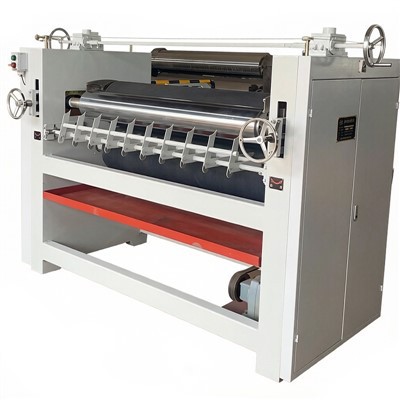
Gluing Machine If you are a plywood manufacturer looking to enhance your production process, we invite you to contact us for a detailed discussion. Our team of experts is ready to provide you with the best solutions tailored to your specific needs. We believe that our hot – presses can make a significant difference in your plywood production, and we look forward to the opportunity to work with you.
References
- Pizzi, A., & Mittal, K. L. (Eds.). (2003). Handbook of wood chemistry and wood composites. CRC Press.
- Rowell, R. M. (Ed.). (2005). Wood and cellulosic chemistry. CRC Press.
- Winandy, J. E., & Rowell, R. M. (Eds.). (2005). Wood handbook: Wood as an engineering material. U.S. Department of Agriculture, Forest Service, Forest Products Laboratory.
Jiashan Changle Machinery Manufacturing Co., Ltd.
We’re well-known as one of the leading hot-press for plywood manufacturers and suppliers in China, also support customized service. Please feel free to buy advanced hot-press for plywood for sale here from our factory. Quality products and punctual delivery are available.
Address: Building 12, Zone A, Wanyang Innovation City, No. 23 Yucao South Road, Ganyao Town, Jiashan County, Jiaxing City, Zhejiang Province
E-mail: Changle84615620@163.com
WebSite: https://www.changlejx.com/
