As a supplier of empty gelatin capsules, I get a lot of questions from small-batch formulators, home-based supplement makers, and even new clinical trial researchers who are trying to figure out how to get consistent, accurate dosages every time they fill their capsules. It’s not as simple as scooping powder and tamping it in, right? I’ve been working in this industry for 12 years, and I’ve seen firsthand how even a tiny variation in filling can throw off a dosage enough to make a supplement ineffective, or even unsafe for someone counting on consistent amounts of an ingredient. Today, I want to walk through exactly what we tell every new customer who reaches out about this—no complicated jargon, just practical, science-backed steps that you can use, plus a few tips that come from years of seeing what works (and what doesn’t) in real, everyday filling scenarios. Empty Gelatin Capsules
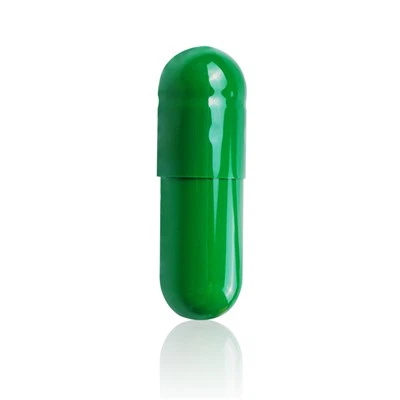
First, let’s start with the foundation: understanding that dosage accuracy starts long before you ever pick up a capsule-filling tool. A lot of people skip the prep work for their powder, and that’s where most of the dosage errors come from. If your powder isn’t uniform in particle size and density, you’re never going to get the same amount in every capsule, no matter how good your filling machine is. Think about it: if you have a powder with big clumps mixed with fine dust, the clumps will weigh more but take up the same space in the capsule as lighter dust. One capsule might get a clump that’s 500mg, the next might be just the dust at 300mg—That’s a 200mg difference, and for someone using a herbal extract or a pharmaceutical-grade active ingredient, that’s a huge problem.
So step one for consistent dosage is refining your powder before filling. I always tell customers to invest in a mortar and pestle or a small powder mill to break up any clumps, then sift the powder through a 40-mesh or 60-mesh sieve. Mesh size matters here: 40 mesh means there are 40 holes per square inch, so it will remove larger particles, while 60 mesh gives you a finer, more uniform powder. But if your ingredient is very potent, you might not want to sift too much—you don’t want to lose any of the active material. In that case, blending the powder with a diluent that has a consistent density, like microcrystalline cellulose, can help. The rule of thumb here is that your blend should have a bulk density that’s as close to uniform as possible. You can test this by pouring a small amount of your powder into a graduated cylinder and tapping it lightly 10 times—if the volume changes by more than 5%, your blend is too loosely packed, and you need to adjust it. Tapping the cylinder again should only change the volume by 2-3% for a good, consistent density.
Next, when you’re working with empty gelatin capsules, you have to remember that capsules come in different sizes, and each size has a specific maximum fill weight. That’s non-negotiable. Size 0 capsules, for example, hold between 500mg and 700mg of powder, depending on the density of the material. Size 00 is bigger, holding up to 1000mg, and Size 1 is smaller, around 400mg. If you try to fill a Size 0 capsule with 800mg of powder, it won’t close properly, and even if you cram it in, the dosage will be inconsistent because some capsules will hold more than others, and you run the risk of powder spilling out when you handle them. I tell all my customers to check the fill weight specifications for the specific capsule size they’re using, and then test what their specific powder weighs in that size. How? It’s simple: take 10 empty capsules of your chosen size, weigh each empty capsule (record that number), then fill each one with your refined powder, cap it, and weigh the full capsule. Subtract the empty capsule weight from the full capsule weight, and calculate the average fill weight. If the individual fill weights vary by more than 5% from the average, you need to go back to your powder prep—you either have clumps that need to be broken up, or your density is still off.
Now, the actual filling method. A lot of people start with manual capsule fillers, which are great for small batches (10 to 100 capsules) because they’re affordable and easy to use, but they require a specific technique to get accurate dosages. When I teach someone to use a manual filler, the first thing I say is to never overpack the wells. Here’s how manual fillers work: the base has holes where you put the empty capsule bottoms, the plate has matching wells that you fill with powder, and the top is the cap plate that you press down to close the capsules. To fill the wells evenly, you should pour a small amount of your powder over the top of the plate, then use a flat scraper (like a plastic or metal bench scraper) to sweep across the plate, pressing lightly so that the powder fills each well completely, but not so hard that it compacts the powder too much. If you press too hard, the powder in the well will be denser, so it will weigh more, and that leads to overfilling some capsules. After you sweep the scraper across, tap the plate gently on the table a few times—this helps settle the powder so that any excess on top comes off, leaving each well with a consistent amount. Then, when you put the capsule bottoms onto the base and press the plate down, you should invert the whole thing and tap it lightly on the table to make sure the capsules release properly before you separate the two halves to cap them.
For larger batches (100+ capsules), most people move to semi-automatic capsule filling machines, and that’s where consistency becomes even more dependent on machine calibration. I’ve seen machines that were poorly calibrated give dosages that varied by 15% or more, just because the user didn’t set the fill volume correctly. With semi-automatic machines, the key parts are the dosator (the part that pulls powder from the hopper and dispenses into the capsules), the tamping pins, and the powder feed. First, you need to make sure the hopper has enough powder to keep the level consistent—if the powder gets too low, it can pull in air, which makes the fill amount lighter. Most machines have a sensor for this, but if yours doesn’t, just add powder whenever the level drops below half the hopper. Then, the tamping step: some machines have a tamping station where they press the powder down slightly before closing the capsules. You don’t want to tamp so hard that the powder can’t dissolve in the stomach later, but you do want it compact enough that the dosage is consistent. Testing here is critical: run a small batch, weigh 10 capsules, and if the fill weight is off, adjust the dosator height or the tamping pressure in small increments—usually 0.1mm adjustments are enough to make a noticeable difference.
One common mistake I see, even with experienced formulators, is not accounting for gelatin’s sensitivity to moisture. Empty gelatin capsules absorb moisture from the air, and they also release moisture to dry environments, and that can change the inner volume of the capsule, which changes the fill weight. If you’re working in a room that’s too humid (over 60% relative humidity) or too dry (under 30%), your capsules can swell or shrink, which means your dosage will vary. I always recommend storing empty gelatin capsules in a cool, dry place (between 15°C and 25°C, 40-50% relative humidity) until you’re ready to use them, and if you’re filling capsules in a space with extreme humidity, you can use a small dehumidifier or a humidifier to adjust the conditions. Even a small change in humidity can make a Size 0 capsule’s internal volume change by 5% or more, so that’s not a step you can skip if you want consistent dosages.
Another thing: if you’re using a capsule filling machine that’s older, or if you’re renting one instead of owning it, make sure you clean the machine thoroughly between batches. Residue from a previous powder can mix with your current ingredient, and it can also build up in the dosator or the wells, which means the next batch of powder won’t fill evenly. I had a customer last year who was making a herbal blend and getting inconsistent dosages, and it turned out that the machine’s dosator had old coffee residue in it from a test batch a month earlier. A quick cleaning with isopropyl alcohol fixed the problem, and his dosages were consistent after that. So cleaning is non-negotiable, even for small batches.
Let’s talk about testing, because even if you do all the prep work and calibrate your machine, you need to verify your dosages regularly. For every 10 capsules you fill, pick one at random, take it apart, weigh the powder, and record the number. Keep a log—this not only helps you spot trends (like if dosages are getting lighter as the batch goes on, which might mean your powder is running low in the hopper) but also gives you a record if you ever need to adjust your process. The FDA, for example, requires pharmaceutical manufacturers to keep dosage records, but even for supplement makers, this is a good habit to get into. If you find that your individual capsule weights vary by more than 5% from the average, go back and check your powder prep, your capsule storage, or your machine calibration. That 5% margin is a standard in the industry for good reason—it’s the maximum variation that doesn’t affect the effectiveness or safety of most ingredients.
Wait, what about hard-to-fill ingredients? Things like very light powders (like dried leaf extracts that are super fine and fluffy) or very dense powders (like mineral supplements that are heavy and compact) can be tricky. For light powders, you might need to add a small amount of a glidant, like magnesium stearate, to help the powder flow more evenly. Magnesium stearate prevents clumping and makes the powder slide into the wells more easily, so the fill amount is consistent. For dense powders, you might need to loosen them a bit with a diluent, as I mentioned earlier, so that they don’t pack too tightly in the capsules. Just make sure you don’t add more than 1-2% glidant or diluent, because that can change the overall dosage you’re trying to achieve.
I want to address something that a lot of new formulators worry about: is it worth investing in a high-quality capsule filler? The short answer is, if you’re making more than 50 capsules a week, yes. A cheap manual filler that costs $20 might work for 10 capsules, but it usually has uneven wells and can lead to a lot of waste. I’ve had customers tell me that they saved hundreds of dollars in wasted ingredients by upgrading to a mid-range manual filler or a small semi-automatic machine. And since empty gelatin capsules are designed to be compatible with most standard fillers, you don’t have to worry about finding a machine that works with the capsules you buy from us—we make our empty gelatin capsules to fit all standard manual and semi-automatic filling equipment, so you can focus on the dosage, not fitting the machine to the capsules.
At the end of the day, consistent dosage for empty gelatin capsules comes down to three things: uniform powder prep, understanding your capsule size and its limits, and careful calibration of your filling equipment. I’ve seen so many people get frustrated because their dosages are off, and more often than not, it’s not the capsules—It’s the powder not being uniform, or not adjusting for humidity, or a quick mistake in filling the wells. That’s why we don’t just sell empty gelatin capsules; we also walk every customer through their process, whether you’re a new small-batch maker or a larger formulator.

If you’re still struggling to get consistent dosages, or if you have questions about which capsule size is right for your dosage, or even how to adjust your powder for a hard-to-fill ingredient, we’re here to help. Connect with our team to discuss your specific needs, and we’ll share tips tailored to your process and your ingredients, no sales pitch, just practical advice from years of experience in the capsule industry.
Empty Gelatin Capsules References:
- U.S. Pharmacopeia. (2020). General Chapter <1171> Pharmaceutical Dosage Forms: Capsules.
- Food and Drug Administration. (2019). Current Good Manufacturing Practices for Dietary Supplements.
- Patel, H. R., et al. (2018). “Factors Affecting Dosage Accuracy in Manual and Semi-Automatic Capsule Filling.” International Journal of Pharmaceutical Investigation, 8(3), 145-152.
- American Pharmacists Association. (2021). Manual for Compounding Capsule Dosage Forms.
Hubei Kornnac Pharmaceutical Co., Ltd.
Hubei Kornnac Pharmaceutical Co., Ltd. is one of the most professional empty gelatin capsules manufacturers and suppliers in China, specialized in providing high quality OEM service. Welcome you to buy bulk customized empty gelatin capsules at competitive price from our factory. Also, samples are available.
Address: No.439 Hebei Avenue, Chibi, Hubei Province, 437300, China.
E-mail: service@kornnaccaps.com
WebSite: https://www.kornnaccaps.com/
