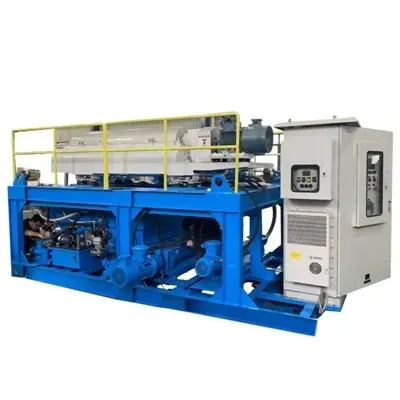
When it comes to industrial processes that involve the separation of solids from liquids, a sludge centrifuge is an indispensable piece of equipment. As a seasoned sludge centrifuge supplier, I’ve had the privilege of assisting numerous clients in finding the perfect centrifuge for their specific applications. In this blog post, I’ll share some key considerations to help you choose the right sludge centrifuge for your needs. Sludge Centrifuge
Understanding Your Application Requirements
The first step in selecting the right sludge centrifuge is to have a clear understanding of your application requirements. This includes factors such as the type and characteristics of the sludge, the required throughput, the desired separation efficiency, and the operating conditions.
Type and Characteristics of the Sludge
The type and characteristics of the sludge play a crucial role in determining the suitable centrifuge design. Different sludges have varying properties, such as particle size, density, viscosity, and chemical composition. For example, if the sludge contains large particles, a decanter centrifuge with a larger bowl diameter and a wider conveyor pitch may be more appropriate to handle the solids. On the other hand, if the sludge has a high viscosity, a centrifuge with a higher power motor and a specialized impeller design may be required to ensure efficient separation.
Required Throughput
The required throughput is another important factor to consider. It refers to the volume of sludge that needs to be processed per unit of time. The throughput capacity of a centrifuge is typically measured in cubic meters per hour (m³/h) or gallons per minute (GPM). To determine the appropriate throughput for your application, you need to consider the incoming sludge flow rate, the desired sludge concentration after separation, and the available processing time. It’s important to choose a centrifuge that can handle the expected throughput without overloading or causing excessive wear and tear on the equipment.
Desired Separation Efficiency
The desired separation efficiency is the ratio of the amount of solids removed from the sludge to the total amount of solids in the incoming sludge. It is usually expressed as a percentage. The higher the separation efficiency, the more effectively the centrifuge can remove the solids from the liquid. The separation efficiency depends on several factors, including the centrifuge design, the operating conditions, and the characteristics of the sludge. For applications that require a high degree of solids removal, such as wastewater treatment or food processing, a centrifuge with a high separation efficiency is essential.
Operating Conditions
The operating conditions, such as the temperature, pressure, and pH of the sludge, also need to be taken into account when selecting a centrifuge. Some centrifuges are designed to operate under specific temperature and pressure ranges, while others are more versatile and can handle a wider range of conditions. Additionally, the pH of the sludge can affect the corrosion resistance of the centrifuge components. Therefore, it’s important to choose a centrifuge that is made of materials that are compatible with the operating conditions of your application.
Types of Sludge Centrifuges
There are several types of sludge centrifuges available on the market, each with its own advantages and disadvantages. The most common types of sludge centrifuges include decanter centrifuges, disc stack centrifuges, and tubular bowl centrifuges.
Decanter Centrifuges
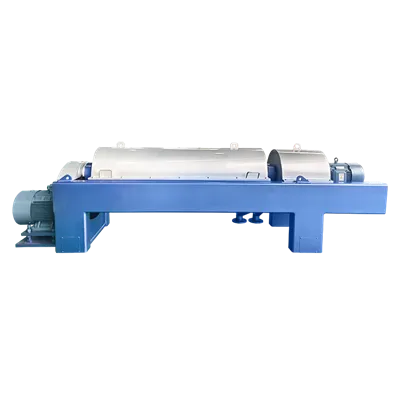
Decanter centrifuges are the most widely used type of sludge centrifuge. They consist of a rotating bowl and a screw conveyor located inside the bowl. The sludge is fed into the bowl through a feed pipe, and the centrifugal force generated by the rotating bowl causes the solids to settle on the bowl wall. The screw conveyor then transports the settled solids towards the conical end of the bowl and discharges them out of the centrifuge. The clarified liquid is overflowed through the channels at the opposite end of the bowl.
Decanter centrifuges are suitable for a wide range of applications, including wastewater treatment, oil and gas production, food processing, and chemical manufacturing. They are known for their high throughput capacity, excellent separation efficiency, and ability to handle a variety of sludge types. However, they tend to be more expensive than other types of centrifuges and require regular maintenance to ensure optimal performance.
Disc Stack Centrifuges
Disc stack centrifuges are another popular type of sludge centrifuge. They consist of a stack of closely spaced discs that rotate at high speed. The sludge is fed into the top of the centrifuge and passes through the spaces between the discs. The centrifugal force causes the solids to settle on the discs, and the clarified liquid is then discharged through an outlet at the top of the centrifuge.
Disc stack centrifuges are known for their high separation efficiency, especially for fine particles and low-density solids. They are commonly used in applications such as dairy processing, pharmaceutical manufacturing, and biotech industries. However, they have a relatively low throughput capacity compared to decanter centrifuges and are more sensitive to changes in the sludge characteristics.
Tubular Bowl Centrifuges
Tubular bowl centrifuges are a type of high-speed centrifuge that consists of a long, narrow tube-shaped bowl. The sludge is fed into the bottom of the centrifuge, and the centrifugal force causes the solids to settle on the inner wall of the bowl. The clarified liquid is overflowed through an outlet at the top of the centrifuge.
Tubular bowl centrifuges are suitable for applications that require a high degree of separation efficiency, such as the purification of biological samples and the separation of fine particles. They have a relatively small footprint and can operate at high speeds, which makes them ideal for applications with limited space. However, they have a low throughput capacity and require frequent cleaning and maintenance.
Other Considerations
In addition to the application requirements and the type of centrifuge, there are several other factors to consider when choosing a sludge centrifuge. These include the cost of the centrifuge, the energy consumption, the maintenance requirements, and the availability of spare parts.
Cost of the Centrifuge
The cost of the centrifuge is an important consideration, especially for small and medium-sized businesses. The cost of a centrifuge can vary depending on the type, size, and features of the equipment. Generally, decanter centrifuges are more expensive than disc stack centrifuges and tubular bowl centrifuges. However, it’s important to consider the long-term cost of ownership, which includes the cost of energy consumption, maintenance, and spare parts, in addition to the initial purchase price.
Energy Consumption
Energy consumption is another important factor to consider, as it can significantly impact the operating cost of the centrifuge. Different types of centrifuges have different energy consumption rates, depending on their design and operating conditions. For example, decanter centrifuges typically have a higher energy consumption compared to disc stack centrifuges and tubular bowl centrifuges. Therefore, it’s important to choose a centrifuge that is energy-efficient and can help you reduce your operating costs.
Maintenance Requirements
The maintenance requirements of the centrifuge also need to be taken into account. Regular maintenance is essential to ensure the optimal performance and longevity of the centrifuge. Different types of centrifuges have different maintenance requirements, depending on their design and operating conditions. For example, decanter centrifuges require more frequent maintenance compared to disc stack centrifuges and tubular bowl centrifuges. Therefore, it’s important to choose a centrifuge that is easy to maintain and has a good reputation for reliability.
Availability of Spare Parts
The availability of spare parts is another important consideration, especially for industries that require continuous operation. It’s important to choose a centrifuge that is made by a reputable manufacturer and has a good supply chain for spare parts. This will ensure that you can quickly obtain the necessary spare parts in case of a breakdown, minimizing the downtime of your operation.
Conclusion
Choosing the right sludge centrifuge for your application is a critical decision that can have a significant impact on the efficiency and effectiveness of your industrial process. By understanding your application requirements, considering the different types of centrifuges available, and taking into account the other factors mentioned above, you can make an informed decision and select the centrifuge that best meets your needs.
Decanter Centrifuge If you’re still unsure which sludge centrifuge is right for your application, or if you have any questions or concerns, please don’t hesitate to contact me. As a sludge centrifuge supplier, I have the expertise and experience to help you choose the right centrifuge for your specific needs and provide you with the support and advice you need to ensure the successful operation of your equipment. Let’s start a conversation about your sludge separation requirements and find the perfect centrifuge solution for your business.
References
- Searcy, C., & Tessier, A. (2010). Dewatering sludge from different waste streams: A review. Water Science and Technology, 61(3), 571-578.
- Nandakumar, K., & Panchal, C. B. (2009). Centrifugal separation technology: Principles and applications. CRC Press.
- Wilson, D. G., & Datta, A. (2013). Separation processes in water treatment. John Wiley & Sons.
Lishui Yuanrong Environmental Protection Equipment Co., Ltd.
As one of the most professional sludge centrifuge manufacturers and suppliers in China, we have world-leading production equipment and strong manufacturing capabilities. Please feel free to buy customized sludge centrifuge from our factory. Also, quotation is available.
Address: Lot 6-1, Block 15, Wanyang Zongchuang City, Lishui, Zhejiang, China
E-mail: 361184920@qq.com
WebSite: https://www.yrhdc.com/
