Hey there! As a supplier of conventional power transformers, I often get asked about inrush current. It’s one of those pesky things that can cause a lot of headaches if you’re not prepared for it. So, let’s dig into what causes this inrush current in a conventional power transformer. Conventional Power Transformer
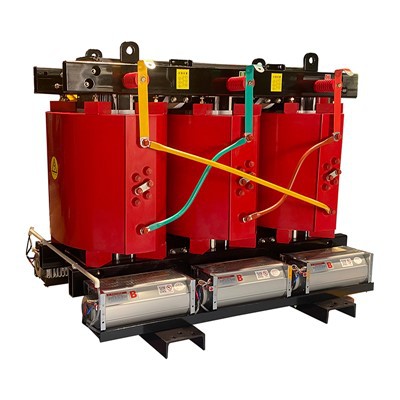
Basics of a Conventional Power Transformer
First off, let’s quickly go over how a conventional power transformer works. A power transformer is all about transferring electrical energy between circuits through electromagnetic induction. It’s made up of a primary winding and a secondary winding, both wrapped around a magnetic core. When an alternating current (AC) is applied to the primary winding, it creates a magnetic field in the core. This magnetic field then induces a voltage in the secondary winding, allowing for power transfer.
What is Inrush Current?
Inrush current is like a sudden flood of electrical current that happens when you first turn on a transformer. It’s way higher than the normal operating current of the transformer and can last for just a few milliseconds to a couple of seconds. This surge can potentially cause problems like tripping circuit breakers, overheating, and even damage to the transformer and other connected equipment.
Core Magnetization
One of the main causes of inrush current is the core magnetization of the transformer. When the transformer is off, the magnetic core is in a demagnetized state. But when you switch it on, the AC voltage applied to the primary winding tries to magnetize the core.
The magnetic core of a transformer has a property called magnetic hysteresis. This means that the relationship between the magnetic field strength (H) and the magnetic flux density (B) in the core is not linear. When you first apply voltage, the core needs to build up the magnetic flux. At the moment of energization, the core might not be in the ideal starting point on the hysteresis curve.
Let’s say the voltage is applied at the peak of its cycle. The core will try to reach a high level of magnetization right away. Since the inductance of the winding is relatively low during this initial stage, a large current will flow through the primary winding. This large current is the inrush current. It’s like a kick – start to get the core into the proper magnetic state for normal operation.
Residual Magnetism
Another factor that plays a huge role in inrush current is residual magnetism. After the transformer is turned off, a small amount of magnetic flux remains in the core. This is called residual magnetism.
The direction and magnitude of this residual magnetism can vary. If, when you turn the transformer back on, the residual magnetism is in the same direction as the magnetic field being created by the newly applied voltage, it will add up. This results in a much higher magnetic flux in the core compared to a situation where there’s no residual magnetism.
As the magnetic flux tries to increase rapidly due to the combination of residual magnetism and the applied voltage, the primary winding draws a large current. And, you guessed it, that’s more inrush current. It’s a bit like having a head – start in a race. The existing residual magnetism gives the magnetic field a boost, causing a greater current flow.
Switching Angle
The switching angle is also very important when it comes to inrush current. The switching angle refers to the point on the AC voltage waveform at which the transformer is switched on.
If the transformer is switched on at the zero – crossing point of the AC voltage waveform, the inrush current is usually relatively small. This is because at the zero – crossing point, the voltage is starting to build up gradually, giving the core more time to magnetize smoothly.
On the other hand, if the transformer is switched on at or near the peak of the AC voltage waveform, the inrush current can be extremely high. As I mentioned earlier, the core will experience a sudden and large change in the magnetic field, which leads to a large current flow in the primary winding.
System impedance
The impedance of the power system connected to the transformer also affects the inrush current. A low – impedance power system allows a larger inrush current to flow. Think of it this way: impedance is like a speed bump for the current. When the impedance is low, there’s less resistance to the flow of electrical current, so the inrush current can rush through more easily.
Conversely, a high – impedance power system restricts the flow of the inrush current. It acts as a stronger speed bump, limiting the amount of current that can flow during the inrush period.
Impact of Inrush Current
The inrush current can have a few negative impacts. As I mentioned earlier, it can cause circuit breakers to trip. This is a safety mechanism, but it can also lead to power outages and disruptions in the electrical system.
Overheating is another issue. The high inrush current can cause excessive heating in the transformer windings. If this happens frequently or if the inrush current is extremely high, it can reduce the lifespan of the transformer and other components.
Dealing with Inrush Current
There are a few ways to deal with inrush current. One common method is to use inrush current limiters. These are devices that are connected in series with the transformer’s primary winding. They limit the amount of current that can flow during the inrush period.
Another way is to use pre – magnetization techniques. This involves applying a small DC voltage to the transformer’s winding before turning on the main AC supply. The DC voltage helps to set the core’s magnetization to a known state, reducing the inrush current when the AC supply is connected.
Why Choose Our Conventional Power Transformers
At our company, we understand the challenges posed by inrush current. That’s why we’ve taken steps to minimize its impact in our products. Our transformers are designed with advanced materials and construction techniques to reduce the effects of core magnetization and residual magnetism.
We also offer inrush current mitigation solutions as part of our product packages. Whether it’s built – in inrush current limiters or pre – magnetization options, we’ve got you covered.
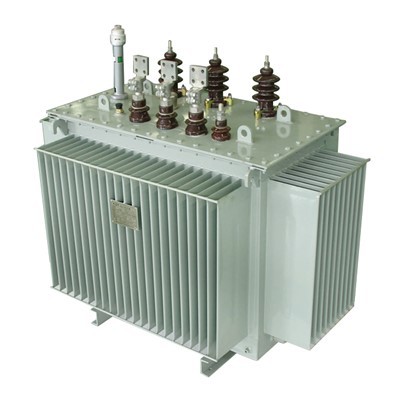
If you’re in the market for a reliable conventional power transformer, we’d love to talk to you. Our team of experts can help you choose the right transformer for your specific needs and provide you with all the information you need about inrush current and how we deal with it.
Conventional Power Transformer So, if you’re interested in learning more or want to start a procurement discussion, don’t hesitate to reach out. We’re here to make sure you get the best power transformer solution for your project.
References
- Electric Machinery Fundamentals, Stephen J. Chapman
- Power System Analysis and Design, J. Duncan Glover, Mulukutla S. Sarma, Thomas J. Overbye
Nantong Yawei New Energy Technology Co., Ltd.
As one of the most professional conventional power transformer manufacturers and suppliers in China, we’re featured by quality products and good service. Please rest assured to wholesale durable conventional power transformer made in China here from our factory. Customized orders are welcome.
Address: Room 28-101, Building 27 and 28, No.333 Kaiyuan Avenue, Sunzhuang Subdistrict, Hai’an City, Nantong City, Jiangsu Province, China
E-mail: admin@nantongyawei.com
WebSite: https://www.nantongyawei.com/
